Did you know that up to 40% of the weight lost on GLP-1 medications can actually be muscle mass? It's a startling figure that highlights why a traditional "eat less" mindset doesn't work anymore. As you embark on your GLP-1 journey, your body's nutritional requirements have fundamentally shifted. This glp-1 nutrition guide is designed to help you navigate these changes with a practical, protein-first strategy that protects your strength.
We understand the struggle of facing intense nausea or feeling completely full after just three bites. It's difficult to focus on health when you're worried about losing your hair or feeling too weak to exercise. You'll learn how to transform your relationship with food from "dieting" to intentional nourishment. We're going to cover specific ways to manage side effects, ensure you're getting enough protein, and build the sustainable habits needed for long-term success in 2026.
Key Takeaways
- Shift your mindset from restrictive willpower to intentional nourishment by focusing on what your body needs to thrive on medication.
- Master the protein-first rule to protect your muscle mass and avoid the common "skinny fat" outcome of rapid weight loss.
- Navigate the "Nausea Gap" with a practical 5-6 mini-meal strategy designed to accommodate slower gastric emptying.
- Stop counting calories and start prioritizing nutrient density to ensure every small bite you take provides essential vitamins and minerals.
- Use this comprehensive glp-1 nutrition guide to build sustainable eating habits that support your health long after you reach your goal weight.
Beyond the Prescription: Why You Need a GLP-1 Nutrition Strategy in 2026
Getting your prescription is a major milestone. It marks the end of the "white-knuckle" era of weight loss where you had to rely on sheer willpower to ignore constant hunger. But the medication is a tool, not a complete solution. To understand why, we have to look at what GLP-1 is and how it signals your brain to feel full. In 2026, we've moved past the idea that these drugs do all the work. Success now requires shifting from fighting your body to supporting it with quiet intentionality.
The medication changes your brain's relationship with food by silencing "food noise." This gives you a rare window of opportunity. You aren't fighting cravings anymore; you're deciding how to fuel a changing body. This is where a glp-1 nutrition guide becomes essential. Without a plan, you risk falling into the trap of simply eating less of the same low-quality foods. 2026 users are moving away from temporary fad diets. They're focusing on foundational health that lasts.
The 'Muscle vs. Fat' Debate
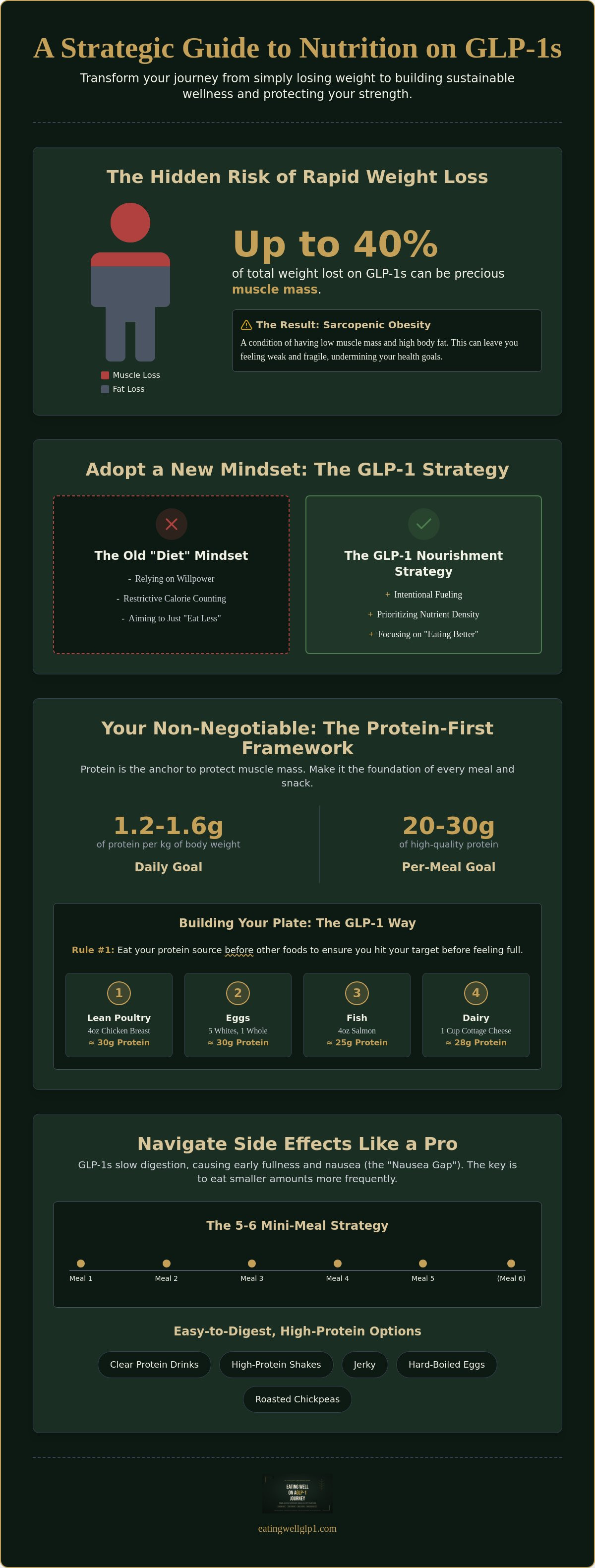
Rapid weight loss is exciting, but it comes with a hidden cost. Current research indicates that lean mass loss can account for 15% to 40% of the total weight you lose. This can lead to sarcopenic obesity. This is a condition where you have a lower body weight but a high body fat percentage and weakened muscles. You might look thinner, but you'll feel exhausted and fragile. Intentional nutrition serves as a muscle-sparing shield that ensures your body burns stored fat while preserving the strength you need for daily life.
Why 'Eating Less' Isn't Enough
When your appetite disappears, it's easy to forget to eat. This is dangerous. Malnutrition is a real risk when your total volume of food drops significantly. Because these medications slow gastric emptying, food stays in your stomach longer. Your "real estate" for nutrients is limited. You can't afford to fill that space with "empty" bites that offer no value. You need to make every single mouthful count toward your recovery and energy levels.
In 2026, users are abandoning the old calorie-counting obsession. Instead, the focus has shifted to nutrient prioritization. If you only have room for five bites, those bites need to be the most powerful ones possible. This glp-1 nutrition guide helps you identify those high-impact choices. It ensures you maintain foundational health while the medication handles the scale. You aren't just eating less; you're eating better.
The Protein-First Framework: Protecting Muscle While Losing Fat
Protein is your anchor. It's the non-negotiable foundation of every meal. When you're on a GLP-1 medication, your body is in a state of rapid change. Without enough protein, that change can cost you your muscle mass. This is why our glp-1 nutrition guide prioritizes protein above all else. It's about protecting your strength while the medication handles the fat loss.
How much do you actually need? Recent guidelines suggest a target of 1.2 to 1.6 grams of protein per kilogram of body weight daily. This aligns with the latest clinical advisory on GLP-1 nutrition, which emphasizes muscle preservation as a top priority. For most people, this means aiming for 20 to 30 grams of protein at every single meal. It's a disciplined approach, but it's the most effective way to stay healthy.
Start with whole foods. Lean poultry, fish, eggs, and Greek yogurt are your gold standards. If those feel too heavy, high-quality whey or plant-based isolates can fill the gap. The goal is consistent intake throughout the day. This keeps your metabolism steady and ensures your muscles have a constant supply of fuel. Timing matters just as much as the amount.
Building Your Plate the GLP-1 Way
Forget the old food pyramid. Your new plate is dominated by protein. Try to eat your protein before touching your vegetables or carbohydrates. This "protein-first" order ensures you hit your nutritional targets before your stomach signals that it's full. A 30g portion looks like approximately 4 ounces of chicken breast, five large egg whites with one whole egg, or a cup of low-fat cottage cheese. For more specific meal ideas, you can find detailed layouts in the Eating Well on a GLP-1 Journey Guide.
Protein on the Go
Life doesn't stop because your appetite did. You need portable options that don't trigger the nausea gap. Look for clear protein drinks or shakes with minimal artificial sweeteners. High-protein snacks like jerky, hard-boiled eggs, or roasted chickpeas are great for grazing when a full meal feels impossible. Think of liquid protein as a nutritional cheat code for those low-appetite days when chewing feels like a chore. It keeps your numbers up without overwhelming your digestive system.
Nutrient Density vs. Calorie Counting: Making Every Small Bite Count
Stop obsessing over the number on the back of the box. For years, weight loss was treated like a simple math problem. You tracked every calorie and fought to stay under a limit. On a GLP-1 medication, the math changes. You aren't fighting to stay under a ceiling. You're fighting to reach a floor. Your appetite is lower, which means every bite of food is precious real estate. This glp-1 nutrition guide shifts the focus from quantity to quality.
Think in terms of "empty" bites versus "power" bites. An empty bite is a refined cracker or a piece of white bread. It takes up space in your stomach but offers no nutritional return. A power bite is different. It's a forkful of salmon, a spoonful of Greek yogurt, or a handful of raspberries. These choices provide the micronutrients, such as B12 and iron, that keep your energy from cratering when your total food intake is low. Your goal is to maximize the utility of every meal.
The Fiber Factor
Slow gastric emptying is a hallmark of how these medications work. While this keeps you full, it also increases the risk of constipation. You need fiber to keep things moving. Soluble fiber, found in oats and beans, dissolves in water to create a gel that aids digestion. Insoluble fiber from vegetable skins provides the necessary bulk. Be cautious with volume. Too much fiber at once can cause significant bloating. Start small. Focus on soft, fiber-rich foods like avocados or well-cooked lentils. Crucially, fiber is a sponge. It requires consistent hydration to function. Without enough water, fiber can actually worsen digestive backups.
Smart Fats and Complex Carbs
Don't fall into the trap of thinking "low carb" is the only way forward. Cutting carbohydrates too drastically can leave you feeling "flat" and mentally foggy. Your brain and muscles still need glucose for fuel. The secret lies in choosing complex carbohydrates like quinoa, berries, or sweet potatoes. These digest slowly and provide a steady stream of energy without the sudden crash. Pair these with anti-inflammatory fats. Olive oil, walnuts, and fatty fish support heart health and help your body absorb fat-soluble vitamins. These fats are calorie-dense, so a little goes a long way. They provide the foundational health support your body needs as it undergoes rapid transformation.
Navigating the 'Nausea Gap': Practical Eating Strategies for Side Effects
Nausea is the primary reason people discontinue their medication. In 2026, we refer to this as the "Nausea Gap." It's that difficult space where you know your body needs fuel, but the very thought of food feels repulsive. Bridging this gap isn't about willpower. It's about tactical management. This glp-1 nutrition guide provides the framework you need to maintain your health even when your stomach disagrees with the plan.
The "three square meals" philosophy doesn't work with slow gastric emptying. When food moves through your system at a reduced pace, a large dinner can feel like a heavy weight for hours. Switch to a 5-6 mini-meal strategy. Aim for small portions of 150 to 250 calories every few hours. This approach prevents your stomach from becoming overextended, which is a major trigger for reflux and vomiting. It also helps stabilize your blood sugar throughout the day.
Identify your personal "Side Effect Triggers" early. Fried, greasy, and ultra-processed foods are the most common offenders. They require more effort to digest and often lead to immediate discomfort. Pay attention to food temperature as well. Hot meals release strong aromas that can trigger a gag reflex. Many people find that cold or room-temperature options, such as chilled protein salads or smoothies, are much easier to tolerate during a nausea flare-up.
Tactical Nausea Relief
Keep natural stomach soothers like ginger and peppermint close at hand. On particularly rough days, adopt a bland-but-balanced approach. Focus on simple, low-aroma foods like plain Greek yogurt or protein-fortified broths. You don't need to eat a complex meal to stay on track. Once the nausea subsides, reintroduce variety slowly. Don't rush back to high-fiber or high-fat foods until you feel stable. For a step-by-step plan on managing these rough patches, check the Eating Well on a GLP-1 Journey Guide.
Hydration Without Bloating
Water is essential, but the timing of your intake can make or break your comfort. Try to stop drinking fluids 30 minutes before and after your mini-meals. This prevents your stomach from stretching too much at once, which reduces the "overfull" sensation. Electrolytes are critical for preventing the dehydration-related headaches common with GLP-1 use. Focus on sipping your fluids constantly rather than gulping large amounts. Gulping introduces excess air into your digestive tract, which often leads to painful bloating and gas.
Take the Guesswork Out: The Eating Well on a GLP-1 Journey Digital Guide
The medication provides the silence. The Eating Well on a GLP-1 Journey Guide provides the plan. Most people start their treatment with plenty of clinical advice but very little practical direction. You know you need to eat. But the "how" and the "what" often remain blurry. This structured PDF guide is the missing piece of your medication journey. It's the glp-1 nutrition guide you need to bridge the gap between a doctor's office visit and your kitchen counter.
Inside, you'll find clear meal choice recommendations and the protein strategies we've discussed. It's more than just a list of foods. It's a comprehensive glp-1 nutrition guide that helps you manage side effects before they derail your progress. Because it's an instant digital download, you get immediate access to clarity. There's no waiting for a shipment. You can start making better choices the very next time you feel hungry.
The goal is long-term health. We want you to build sustainable habits that last long after the medication ends. This isn't about a temporary fix. It's about foundational wellbeing. By mastering these principles now, you're setting yourself up for a future where healthy eating is second nature. You're not just losing weight. You're gaining a new way of living.
Your Daily Companion
Grocery shopping shouldn't feel like a chore. The guide simplifies your trips to the store and takes the stress out of meal prep. It moves you away from "fad diet" confusion and toward common-sense wisdom. You don't need a radical overhaul. You need a practical framework for success. This guide acts as your knowledgeable and pragmatic companion. It empowers you to take ownership of your health journey without feeling overwhelmed by information overload.
It breaks down complex nutritional needs into simple, actionable steps. You'll learn how to manage social events, travel, and busy workdays while staying true to your protein-first goals. It's about making the most of every bite. Even when your appetite is at its lowest. This guide gives you the tools to succeed in the real world.
Start Your Journey Today
2026 is the year to prioritize your foundational health. With new medications and higher dosages hitting the market, your nutritional strategy is more important than ever. You can get your copy of the Eating Well on a GLP-1 Journey Guide directly from our site. It's a simple step that yields significant results. There's no need to guess what your next meal should be when the answers are one click away.
You are in control of your nourishment. The medication is a powerful tool, but you are the architect of your success. Don't leave your nutrition to chance. Equip yourself with the knowledge needed to thrive. Start your journey with confidence today and see the difference that intentional eating makes.
Master Your Health Beyond the Scale
Success on weight loss medication isn't just about the numbers dropping. It's about how you feel and how you fuel your body during this rapid transformation. You've learned that a protein-first approach is your best defense against muscle loss. You've also discovered that managing the "Nausea Gap" requires small, intentional bites rather than large, overwhelming meals. This glp-1 nutrition guide serves as your foundation for building habits that last long after your treatment plan evolves.
Don't let information overload or physical discomfort stall your progress. You deserve a clear, practical roadmap that takes the guesswork out of your daily routine. If you're ready for immediate clarity and actionable strategies for nausea relief, you can Get the Eating Well on a GLP-1 Journey Guide today. This instant digital download provides the meal choice recommendations and protein strategies you need to thrive right now. You have the tools. You have the knowledge. Now, it's time to take control of your nourishment and embrace a healthier future with confidence.
Frequently Asked Questions
What are the best foods to eat while taking GLP-1 medications?
Prioritize lean proteins, fiber-rich produce, and healthy fats that support stable energy levels. Focus on chicken, fish, eggs, and Greek yogurt to preserve muscle mass while the medication handles fat loss. Berries, avocados, and well-cooked lentils provide the necessary fiber to keep your digestion moving. These nutrient-dense choices ensure you stay nourished even when your total food volume is significantly lower than it was before you started treatment.
How do I make sure I'm getting enough protein on Ozempic or Wegovy?
Target between 1.2 and 1.6 grams of protein for every kilogram of your body weight daily. This usually means aiming for 20 to 30 grams at every mini-meal you consume. Always eat your protein source first to ensure you hit your targets before your stomach signals that it's full. If solid food feels too heavy, high-quality whey or plant-based isolates are effective tools to reach your daily protein floor without discomfort.
What should I eat when I have no appetite but need to nourish my body?
Opt for nutrient-dense liquids and small, frequent snacks when a full meal feels impossible. Protein-fortified broths, smoothies, or clear protein drinks provide essential fuel without the "heavy" feeling of solid food. Try grazing on "power bites" like a few almonds or a hard-boiled egg every two hours. This approach keeps your energy levels stable without overwhelming your digestive system. It's about maintaining foundational health during these low-appetite phases.
Can I follow a specific diet like Keto or Paleo while on a GLP-1?
You can adapt these frameworks, but strict restriction often leads to fatigue on these medications. Many people find that a moderate approach works best because your body still needs some complex carbohydrates for brain and muscle fuel. If you choose Keto, prioritize healthy fats that don't trigger nausea. If you prefer Paleo, ensure you're hitting your high protein targets. The most important factor is creating a sustainable pattern that supports your specific physical needs.
How can I manage nausea and stomach upset through my diet?
Manage nausea by switching to five or six mini-meals and avoiding fried or spicy foods. Large meals sit in the stomach longer, which often leads to discomfort and reflux. Many users find that cold or room-temperature foods are easier to tolerate because they have less intense aromas. Keep ginger or peppermint tea nearby for immediate relief. This glp-1 nutrition guide approach ensures your stomach is never too full or too empty.
Is it okay to use protein shakes as meal replacements on weight loss meds?
Protein shakes are valuable tools for meeting your daily requirements, especially on days when your appetite is non-existent. They are easier to digest and help you reach your protein goals without the effort of chewing. However, try to include whole foods whenever possible to ensure you get a full spectrum of vitamins and fiber. Use shakes as a nutritional bridge rather than your only source of fuel to maintain long-term health.
What foods should I avoid to prevent GLP-1 side effects?
Steer clear of fried foods, heavy sauces, and ultra-processed snacks that can slow digestion even further. These often trigger significant bloating, gas, and nausea. Carbonated drinks can also cause painful pressure in a slow-moving gut. High-sugar foods might lead to rapid blood sugar shifts, causing dizziness or "dumping" sensations. Identifying these triggers early helps you stay comfortable as you navigate your glp-1 nutrition guide and build better daily habits.
How much water should I be drinking while on these medications?
Drink at least 80 to 100 ounces of water daily to support kidney function and prevent constipation. Hydration is critical because these medications can change your thirst signals. Include electrolytes once a day to help prevent the headaches often associated with rapid weight loss. Remember to sip consistently throughout the day. Avoid gulping large amounts during meals, as this can lead to uncomfortable bloating and a premature feeling of fullness.